A Dark Room
Indie gameLight a fire, gather wood and grow a settlement in Michael Townsend’s minimalist text adventure.
Loading Series of Tubes...
Connecting to Zadely
First network guide · Credits and source · MIT license
If browser privacy settings block embedded saves, open the Zadely player in a new tab. It may keep a separate save library; use Export Save and Import Save to move a network.
Run an internet provider. Connect cities, buy transit and keep traffic moving as your network grows.
Series of Tubes puts you in charge of a fledgling autonomous system trying to grow into a global Tier 1 internet backbone. You open points of presence (POPs) in real world cities, lease terrestrial waves or dig dark fiber, sign up local eyeball and business customers, and negotiate transit and peering agreements.
As your network scales across continents, real-world internet hazards kick in: backhoes sever land links, fishing trawlers and sharks damage subsea cables, traffic spikes saturate under-provisioned ports and BGP routing leaks force you to reroute packets before SLA penalties drain your cash.
Zadely independently hosts version 3.5.0 of Frederic Jung’s MIT-licensed network simulation, including weekly puzzle, scenario and architect packs. Saves stay in your browser under the isolated player origin and can be exported as files at any time.
Made by Frederic Jung.
Select Play here and choose Sandbox, Normal, Weekly Puzzles or Architect scenarios. Sandbox removes bankruptcy pressure while you learn POPs, waves and peering; Normal adds recurring operating costs, customer SLAs and live network incidents.
| Click or tap a city | Open the city inspector for Infra, Customers, Transit and Peering |
|---|---|
| Infra → Link to a city | Search destinations by name and lease waves or lay fiber |
| Drag or swipe on the map | Pan across continents and subsea routes |
| Scroll or pinch | Zoom in on dense European, US or Asian hubs |
| HUD speed buttons | Pause or accelerate simulation ticks during incidents |
Early on, buying upstream transit is the fastest way to reach the rest of the internet, because a single transit contract carries traffic to every network you do not connect with directly. However, transit bills scale with peak traffic, so relying on transit alone will eat your margins once customer demand grows.
Joining an Internet Exchange Point (IXP) in major hubs like Frankfurt, Amsterdam, London or Ashburn lets you exchange traffic with dozens of peers over one port fee. Once a specific content provider or CDN sends heavy sustained volume, upgrading to a Private Network Interconnect (PNI) or hosting a local CDN cache slashes latency and transit spend.
| Network challenge | Best operational fix |
|---|---|
| Transit bill growing faster than revenue | Join the local IXP and peer with open-policy networks before upgrading upstream ports. |
| Single cable cut drops an entire region | Add a redundant ring path (e.g., Frankfurt–Amsterdam–London–Frankfurt) so BGP reroutes automatically. |
| High latency complaints from customers | Host local CDN caches in eyeball cities to serve popular traffic without crossing oceans. |
| Learning the UI without going broke | Start in Sandbox mode or try the weekly routing puzzles to master capacity planning first. |
Tier 1 status means reaching the entire global internet through settlement-free peering alone—zero paid transit. To get there, expand along high-density corridors first, maintain at least 30% headroom on backbone links for failover traffic, and treat every NOC alert as a signal to add redundancy rather than just patching one broken link.
Explore more source-available web games in our open-source browser games directory.
No. The tutorial goals explain POPs, waves, transit and peering step by step, and Sandbox mode lets you experiment without bankruptcy pressure.
Open the in-game menu and choose Export Save. You can re-import that file in a new tab or another device with Import Save.
Yes. You can pinch-zoom the map and use Infra → Link to a city to search cities by name when two hubs do not fit on a phone screen.
Zadely hosts an unmodified v3.5.0 build of Frederic Jung’s MIT-licensed open-source release with full attribution and license files included.
Sources: seriesoftub.es, github.com. Last checked .
Light a fire, gather wood and grow a settlement in Michael Townsend’s minimalist text adventure.
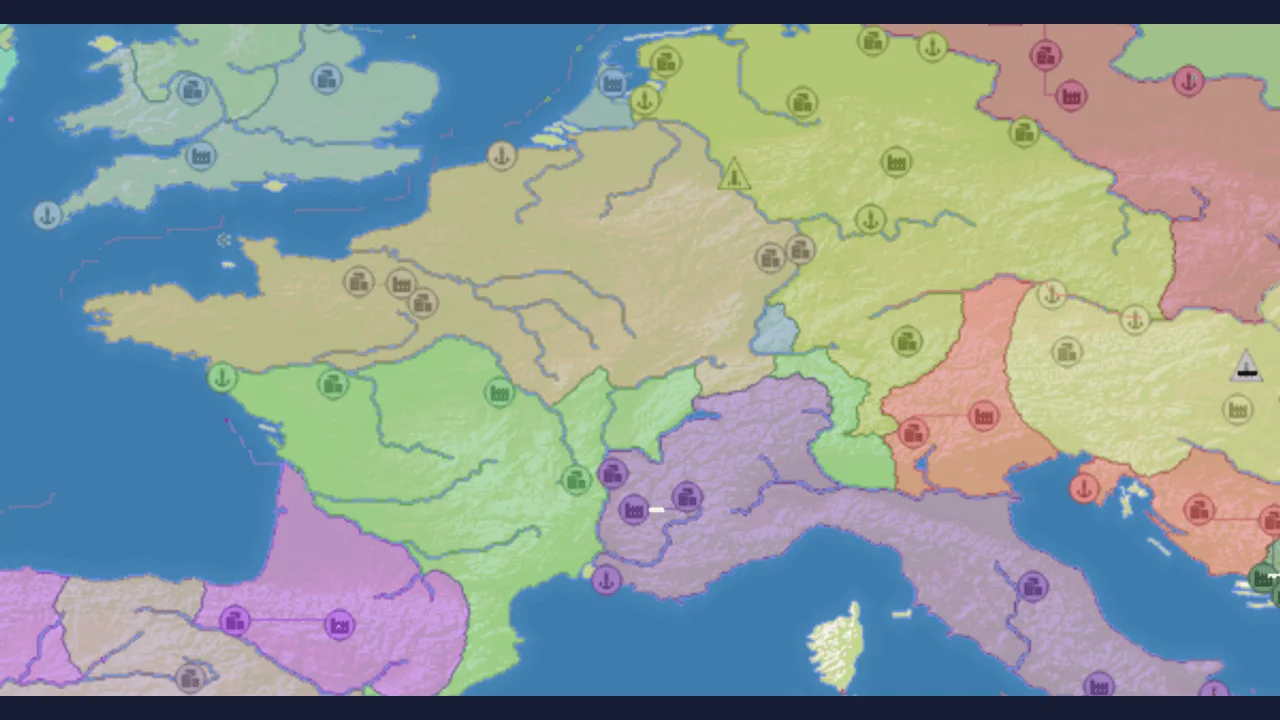
Expand across a shared map in a real-time territory strategy game. Manage your borders, economy and attacks while other players compete for land.
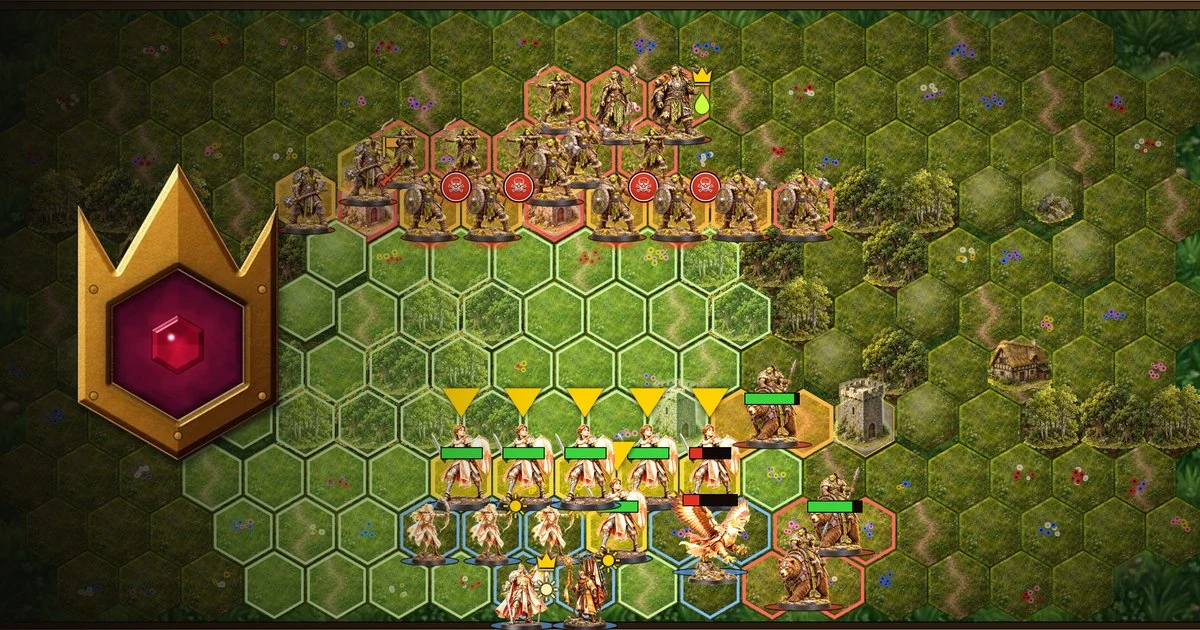
Build a fantasy army and fight turn-based battles on a hex board, protecting your king while hunting the opposing ruler.
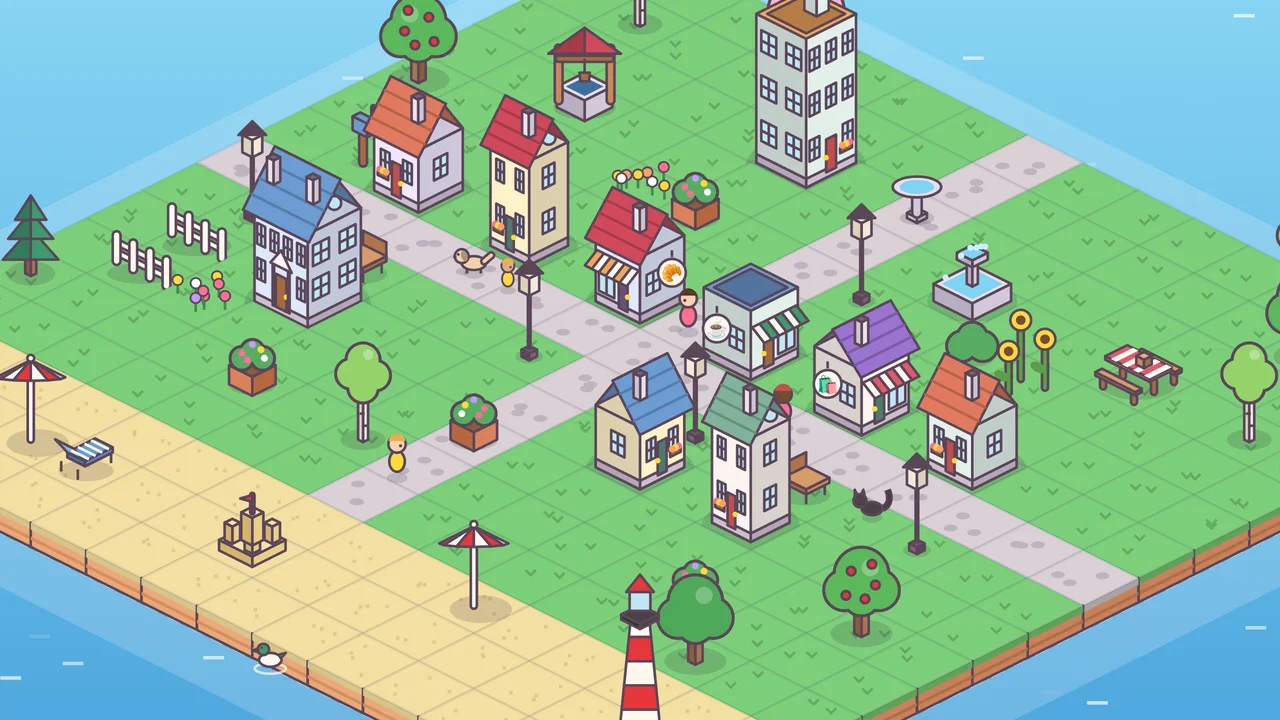
Clear a little island and gradually build a cozy seaside town with homes, paths, gardens and shops.